Unlocking Stress Relief: Implementing Micro Habits at Home
Unlocking Stress Relief: Implementing Micro Habits at Home
Estimated reading time: 7 minutes
Key Takeaways
Micro habits are small yet powerful tools for daily stress management.
Science supports the idea that small, consistent changes drive lasting results.
With a few practical steps, micro habits can easily fit into any lifestyle.
Real-life applications show tangible benefits in energy, mood, and focus.
Introduction
In today’s fast-paced world, stress relief often feels like another task on an already full to-do list. Micro habits, tiny repeatable actions that fit naturally into your routine, offer a simple and sustainable way to manage tension and build calm into everyday life.
This guide explains what micro habits are, how they work, and how to apply them at home for better balance, energy, and mental well-being.
The Science Behind Micro Habits
Micro habits are grounded in behavioral psychology. Research on habit formation shows that small, repeatable actions have a higher success rate because they create momentum without triggering resistance.
When you practice a small calming action consistently, such as taking a single deep breath before answering a stressful email, your brain starts to associate that action with relief. Over time, this association can reshape your response to stress, lower overall anxiety, and improve focus.
Scientific findings suggest that micro habits can:
Reduce stress hormone activity through regular breathing and movement
Strengthen neural pathways responsible for self-control
Increase positive reinforcement, which supports motivation and emotional regulation
Because they are simple and easy to repeat, micro habits form an effective, evidence-informed approach to long-term stress reduction.
Starting with the Basics
If you are new to micro habits, the most important rule is to start small. These habits work best when they feel effortless and are easy to repeat every day.
Basic steps to begin:
Choose one small action
For example, two minutes of morning stretching or three deep breaths before you sit at your desk.Anchor it to an existing routine
Attach the habit to something you already do, such as brushing your teeth, making coffee, or logging in to your computer.Repeat it at the same time each day
Consistency helps your brain turn the action into an automatic behavior.Expand only after it feels natural
Once the first habit is automatic, you can add another small habit or increase the duration slightly.
Starting with the basics keeps the process realistic and supports long-term success.
In-Depth Analysis or Benefits
Implementing micro habits at home offers a range of benefits for both mind and body.
Emotional and mental benefits:
Lower daily stress levels
Better emotional regulation in challenging situations
Stronger sense of control over your responses
Improved clarity and focus
Physical benefits:
Reduced muscle tension from brief, regular movement
Improved breathing quality and oxygen flow
More restful sleep through consistent evening routines
The key factor is consistency. Because micro habits are flexible and minimal, most people find them easier to maintain than large, time-consuming practices. Over weeks and months, these small actions can produce noticeable improvements in overall well-being.
Real-Life Examples and Applications
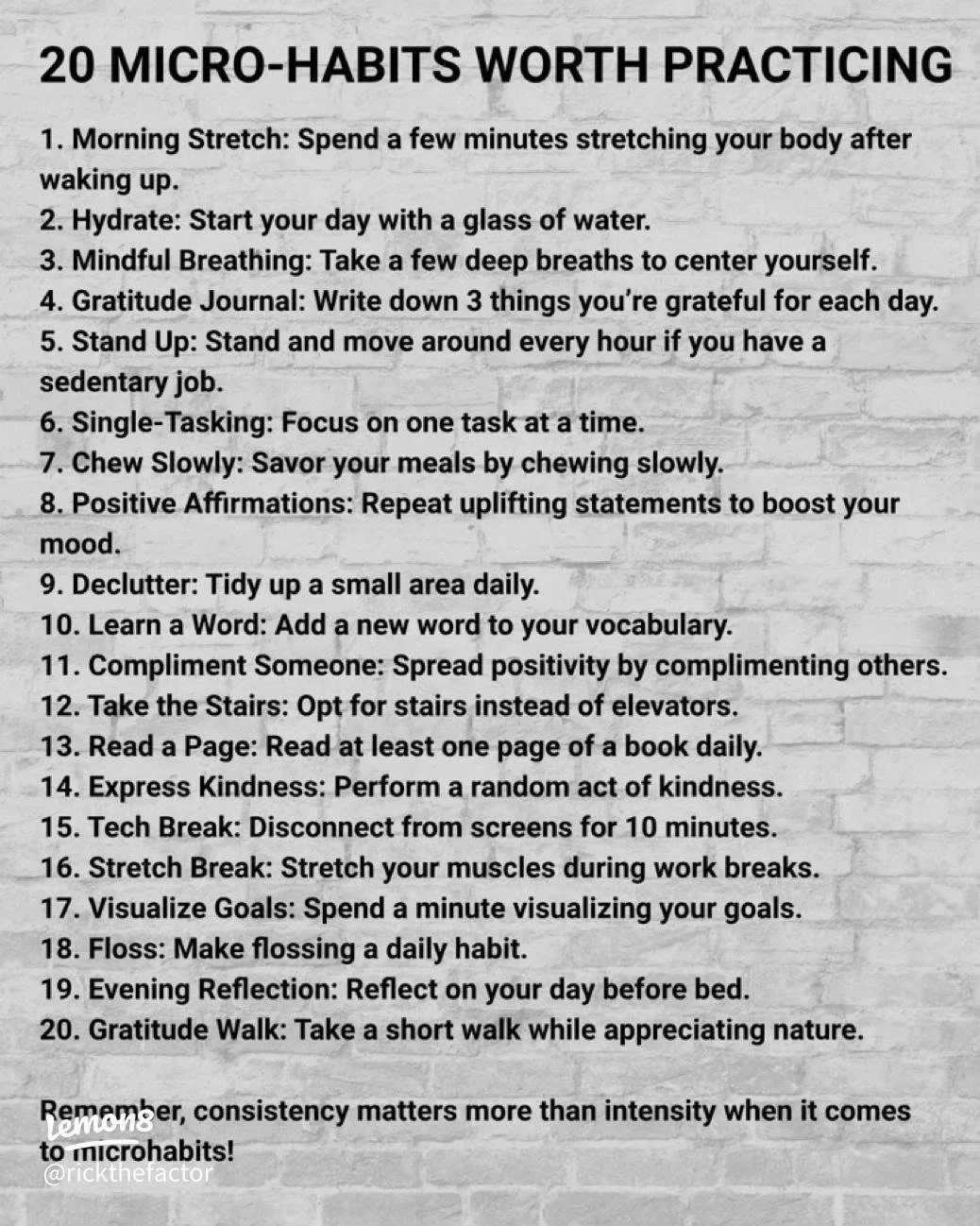
Here are a few simple micro habits that fit easily into a home routine:
Three-breath reset before tasks
Before opening email or starting a meeting, pause and take three slow breaths to calm your mind.One-minute stretch after sitting
Each time you stand up from a long sitting period, stretch your neck, shoulders, and back for one minute.Gratitude sentence at night
Before going to sleep, write down one thing that went well during the day. This gently shifts your focus away from stress.Transition pause after work
When you finish work for the day, take a short pause to breathe, reflect, and mentally move from work mode to home mode.
Each of these habits is small on its own, but together they reduce daily tension and build a more relaxed, intentional rhythm at home.
Conclusion and Call to Action
Micro habits for stress relief at home provide a realistic and sustainable path to lower stress and improved well-being. They are simple, adaptable, and can fit into even the busiest schedules.
By introducing and maintaining small changes, you can create a meaningful positive impact on your stress levels and quality of life.
Call to Action:
Choose one micro habit from this guide and practice it every day for the next seven days. Notice how your mood, energy, and stress levels respond. When you are ready, add a second habit and keep building from there.
You can also share your experience with micro habits in the comments, or sign up for our newsletter to receive more practical strategies for stress management and personal growth.
Additional Elements
To support your journey, this guide can be paired with:
Infographics that illustrate sample micro habits and how to stack them
A printable micro habit tracker to visualize progress
Short visual reminders that can be placed around the home
These elements help make the concepts easier to understand and apply right away.